
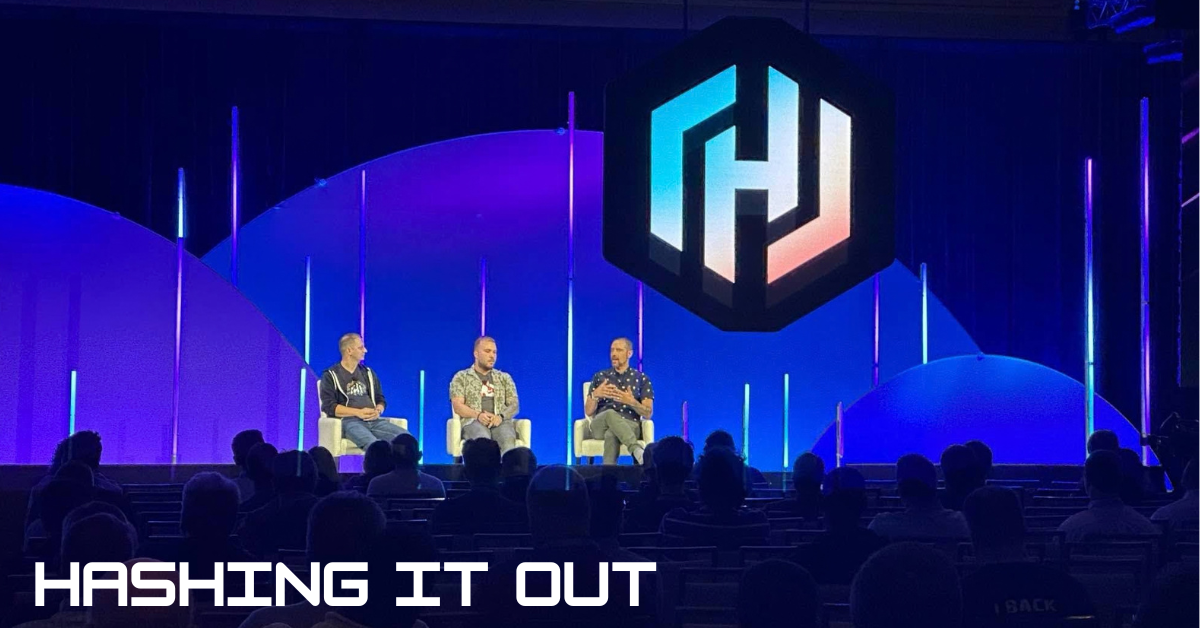
The one constant in life is change. I know, I KNOW. It’s a trite thing to say and probably more than a little cliche. But you know what? It’s also profoundly true. The kind of thing you should tattoo to the back of your eyelids so you see it every time you blink.
The one constant in life is change. We all know this, and yet when the ground shifts beneath us, the winds of change blow, and some third metaphor for change happens; it is no less surprising and disconcerting. When assessing someone’s mental health, one of the major questions asked is whether there have been any recent significant changes. Not necessarily good or bad changes, just changes.
We are creatures of habit. Routines and schedules dominate our lives. We are also curious creatures who seek out the novel and interesting. Too much routine or too much novelty is psychologically stressful. I feel like I’m always searching for that happy medium between order and chaos. A life of order feels like a slog, a rut, a maze learned by rote devoid of surprise or delight. On the other hand, a life of chaos feels intense, overwhelming, and disconcerting, like tap-dancing on quicksand in a hurricane. I think we all search for the Goldilocks zone where things are stable enough to feel comfortable, yet novel enough to keep us interested.
You might be asking, “Ned, what the hell are you talking about.” And fair point, that was a massive amount of rambling. This post is my attempt to process how I’m feeling about HashiCorp. If that’s of interest, then read on friend.
Back in the dark days of 2015, I was working for a Value Added Reseller (VAR) as a consultant on the infrastructure services team. Our job was to sell services around the hardware and software sold by the VAR. That included products from HPE, Citrix, Microsoft, VMware, etc. Sometimes it was something simple, like racking and stacking new hardware for a client and getting it configured. Other times it was more involved, like consolidating Active Directory domains or migrating them from on-prem Exchange to Office 365.
As a consultant, I was often asked to work on things that I had little experience with. If I was very lucky, I would have a chance to mess with things in our lab before I had to go to the client and deliver the solution. Case in point, I was once assigned a project implementing a proof of concept installation of VMware Horizon View at a client the following week. I had never touched Horizon View. I didn’t know the architecture, components, or interface. Yet, somehow I was expected to sit with a client the following week and deploy this whole thing in a working state over the course of three days.
I’d like to say that was an uncommon occurrence, but I’d be lying. I caught on to this pattern pretty quickly, and as a result I began finding ways to quickly lab out an environment I could test on. The VAR had lab equipment I could use, but often it was in use by another consultant in the same predicament as me. So I lobbied for a laptop with 32GB of RAM and learned to run things locally. Remember that this was 2015, before Docker and containers really took off, so the main way I could lab things locally was with VirtualBox.
VirtualBox provided the platform, but it didn’t provide the OS images to run the virtual machines. If I needed a Windows Server 2012 domain controller, an IIS server on 2008, or ADFS on 2008 R2, I had to build that box myself from scratch. I ain’t got time for that! It was in that frame of mind I discovered Vagrant. Instead of building from scratch every time, I could use images from Vagrant to quickly build out a lab environment and test out different scenarios. Vagrant was awesome! I even went so far as to pay for it!! This was my first contact with HashiCorp, who I was only vaguely aware as the company behind Vagrant.
It was the following year that I came across Terraform. I had just finished another project where I was learning on the fly. This time, I was asked to assist a Healthcare startup with automating their AWS infrastructure. Another consultant had setup a PoC environment in AWS for them by clicking around the console. The client wanted to be able to deploy it and update it automatically. Even though I had basically never touched AWS before, I was immediately thrown into the deep end. Incidentally, this is also when I started using Pluralsight to learn things. I took the Getting Start with AWS course to get up to speed.
The only AWS automation I knew of was CloudFormation. This is before they added YAML support, so I painstakingly wrote a few thousand lines of CloudFormation JSON to fully automate the deployment of their environment. I even added support for deploying three different environments, so they could deploy to dev, staging, and prod. The whole thing was immensely tedious and working with that much JSON is enough to make anyone feel a bit loopy.
After that experience, I figured there had to be something better. That’s when I stumbled across Terraform and immediately I was hooked. Not only was HCL a better language than JSON, Terraform had support for multiple cloud providers. Our team was working on both AWS and Azure projects, and I could use this one tool to manage both. I was no longer subject to the whims of CloudFormation’s deployment service, which could be a little wonky at times. I was a full Terraform convert and I started pushing the rest of the infrastructure team to adopt it as well.
Being a consultant requires a lot of rapid learning. As I mentioned, I was using Pluralsight to get up to speed on topics like AWS, Citrix, and VMware. While at a Microsoft Ignite conference, I started talking to some folks from Pluralsight about the courses, and I asked them what it took to become an author. I’ve always enjoyed sharing knowledge and teaching others, and this seemed like an ideal opportunity. Turns out, all I had to do was send an email to their head of author recruitment and he would set me up with an author audition. The audition was essentially a mini-course you had to put together that was about 5 minutes long. They wanted to get a sense for your teaching style, ability to put together a presentation, and record and edit that presentation.
For my topic, I chose a brief introduction to Terraform. It was a 5 minute tutorial on what Terraform is and how to deploy an EC2 instance to AWS with it. The audition was a success and I was approved as an author. Not only that, but Pluralsight didn’t have a Terraform course yet and people were asking for it. They commissioned me to create a Getting Started course. It took me several months to complete the course with it finally publishing in August of 2017. Turns out that was good timing, as interest in Terraform was skyrocketing. My course quickly became one of the most popular on the platform, regularly sitting in the top 50 courses. After that, they commissioned a Terraform Deep Dive course from me, which I finished in February of 2018. It was also pretty successful, which made me curious about other HashiCorp products.
Checking the product catalog for HashiCorp at the time, it included Vagrant, Vault, Nomad, and Packer. Out of those, I found Vault to be the most interesting, so I decided to propose a Getting Started with Vault course. That was approved and published in February of 2019, along with a another Vault course in June of the same year.
In May of 2019, I quit my consulting job and founded Ned in the Cloud. The financial backing for this decision largely came from my Pluralsight earnings. The popularity of my HashiCorp courses was pulling in some serious dough, and I figured why not try to make a full-time go at this? My course output increased rapidly as I pursued other topics in the world of Azure and AWS.
Pluralsight and HashiCorp were increasingly becoming part of my identity and my public persona. In 2020, I started a YouTube channel featuring content around Terraform, Vault, industry analysis, and home labbing. The videos that consistently did the best were my Terraform Tuesdays episodes. It wasn’t even close. Given the popularity of my Terraform courses on Pluralsight, I guess that shouldn’t have been surprising.
My subscriber count on YouTube continued to grow, and vendors started reaching out about sponsorship and opportunities. At the same time, I was asked by a VAR to create private training materials for some of their clients that were adopting DevOps practices in their org, including Terraform and Vault. The folks at the VAR had found me through my YouTube content! The VAR also provided public and private live training for Vault and Terraform. I asked if I could become one of their instructors, and they readily agreed.
While all this was happening, the certification team at HashiCorp reached out to see if I wanted to help with the development of the Terraform and Vault Associate certifications. They were looking for someone to assist in writing and reviewing questions. The head of the certification program had previously worked at Pluralsight, and she was aware of my expertise in Terraform and Vault. I contributed to both exams, and also wrote my own certification guide for the exams and published it on Leanpub.
In late 2019, HashiCorp started a community program called the HashiCorp Ambassadors. It is similar in nature to the Microsoft MVPs, AWS Community Builders, and Docker Captains. You needed to apply to be part of the program, and if accepted it came with a bunch of perks. There was swag, of course, but also the opportunity to interact directly with the product teams at HashiCorp, free passes to HashiConf, a dedicated Slack workgroup, and much more.
Given how active I already was in the HashiCorp community, I jumped at the chance to apply for the program, and was accepted as part of the inaugural group! Through the program I got to meet a bunch of amazing people and forge friendships that are still going strong seven years later. Unfortunately, the pandemic kind of shut down in-person conferences and so I attended my first HashiConf virtually. Since they started happening in person again, I have been to all of them. Each one was an absolute blast and I felt a little like a celebrity. People would recognize me in the hallway, I gave talks at many of them, and I even signed an autograph or two. It was absolutely amazing!
It’s hard for me to overstate how much the community around HashiCorp means to me. That includes Hashi employees, Ambassadors, and everyone else who attends Hashi conferences or participates in their user groups. If there’s one consistent factor among all these people, it is their kindness. At every Hashi event, I’ve always felt welcome and tried to welcome others in return. One of my favorite shirts from Hashi says “For everyone, everywhere.” I realize the shirt has a distinct LGBTQIA+ message, but for me it’s a larger message of acceptance and welcoming.
At this point, I want you to understand just how intertwined my life has become with HashiCorp:
It’s not uncommon for people to think that I actually work for HashiCorp. And while that’s not strictly true in the sense of being a full-time employee, it’s true in the sense that a majority of my revenue comes from HashiCorp related things.
In April 2024, it was announced that HashiCorp was being acquired by IBM.
SIGH
Okay, I want to give a little disclaimer here. Well, maybe not so little.
The rest of this post is not meant to impugn on IBM as a company, HashiCorp as a company, or the employees of either company. I’m not here to shit on people and be an asshole. C’mon, if you know me, that’s not really my thing. Business is business and I’m not so naive that I don’t recognize the need for companies to be profitable - the entire AI industry notwithstanding. To that end, capitalism is going to capitalize, and even if I don’t like the results, I understand their necessity, sometimes.
I’d be lying if I said my initial reaction to the news wasn’t, “Well shit.”
But why was that my reaction? The primary reason is that I just don’t like big organizations. That’s been true for as long as I can remember. When I was in elementary school, I went to the smallest school in the district. When I moved to the larger middle school, I hated it. By high school, I ended up at an alternative school with a total student body of 80 kids. When I went to college, I started at Drexel University in an engineering program with over 400 other Freshman. The school was massive and impersonal, and I hated it. I ended up getting my Associates Degree from a two-year technical school with an average class size of 30. When I start working in tech, the jobs I liked the least were those at larger companies. I worked for the consulting wing of a major audit firm and for a large retailer, and dealing with the corporate bureaucracy made my scalp itch and palms sweat.
While I was working as a consultant for the unnamed VAR, the company itself was only about 250 people. Our infrastructure services group rarely grew beyond 25 people. That is the right size for me. Eventually the VAR was purchased by a private equity firm, and they started merging us with other companies. I could watch the culture erode in real time as bureaucracy slowly encroached on every process.
I also worked on a lot of projects for large organizations while I was in consulting, and I got a sense of the nightmare that was being an enterprise employee. Every project for a Fortune 500 reinforced the fact that I should never work for one of them as an FTE.
Every organization I’ve loved working for, every community I’ve loved being part of, every school I’ve loved attending all had a common set of attributes. They were small, they had a distinct culture, and I felt personally seen by the community.
HashiCorp was that. Being absorbed into IBM gave me the distinct impression the end of an era was nigh.
Change is inevitable. Hey, look at that! I brought the introductory theme back around. The period of 2019-2024 for HashiCorp represented a halcyon time of growth, learning, and community. The Ambassador program grew along with the size of the company. My personal network became ever more entwined with the folks working there. I was riding high on a wave that was cresting.
It’s not like there weren’t rumblings deep down in the bowels of the company. The IPO had been successful, but the stock hadn’t performed as anyone would have hoped. Mitchell Hashimoto - one of the two founders - demoted himself and then left the company entirely. The company adopted the Business Source License for its products, alienating a lot of OSS aficionados. OpenTofu became a thing and the schism remains to this day. By late 2023, people were definitely waiting to see who would acquire HashiCorp, so it wasn’t a total surprise when IBM made the announcement in 2024.
Post acquisition, things have begun to shift. In small increments at first, but with ever increasing rapidity. HashiConf this year will be cohosted with TechXchange, and I fully expect this to be the last year it is billed as a separate conference. The Ambassador program has been merged into the IBM Champions program. The other co-founder, Armon Dadgar, has also left the company along with many original employees. If you scan through my LinkedIn feed these days, there’s post after post of people leaving HashiCorp.
They all have their own reasons, and I don’t want to project my feelings upon them. But if I had to guess, at least some of them left because they don’t want to work for a 250k employee mega-corp. No offense to IBM, but I think I’ve made my feelings about large organizations pretty clear. I DON’T LIKE BEING PART OF THEM. I suspect that anyone who had been at HashiCorp since the early days enjoys working for a smaller organization and especially one with HashiCorp’s culture.
And that’s the thing I keep coming back to. Wayyyyy back in 2018, I actually applied to work for HashiCorp. I obviously didn’t get the job, but in the process I read the Tao of HashiCorp and their stated principles. Both documents resonated with me, and based on my interactions with HashiCorp folks I can clearly see it resonated with them too. They are principles of design and culture that lead to a community based on understanding, kindness, and humility. I love that.
The culture and community of HashiCorp is being absorbed and assimilated into IBM. I grieve for it. I’m not trying to sound hyperbolic here. This is 100% in earnest. I grieve for the ending of an era. Change is inevitable. Sometimes that change is painful, and we need to acknowledge that pain before moving on. I need to acknowledge that in the acquisition and transformation, something is being lost that can never be recaptured. The new thing isn’t bad, just different, and I grieve for what was lost.
So if you’re a member of the HashiCorp community and you’re feeling inexplicably sad, know that you are not alone. All of the amazing people that made up HashiCorp and the Ambassadors are still out there. They are still doing cool things, being kind, and helping others. There is a light at the end of the tunnel, but there’s no avoiding going through the darkness. Best to do it together.
It’s dangerous to go alone! Take this 🤗.
October 5, 2026

August 29, 2026

May 23, 2026

